

Cracker burns: first aid, and when a plastic surgeon should see the burn
What to do in the first minutes after a cracker burn, which burns need a hospital, and why a plastic surgeon should see deeper burns early.
Crackers are part of every celebration in Tirupati, and so, every year, are cracker burns. Most are small and heal well with the right first aid. Some are deeper than they look, and the care they get in the first days decides how the skin heals and how well a hand or a joint moves later.
This guide covers what to do in the first minutes, which burns need a hospital, and why a plastic surgeon should see deeper burns early.
First aid in the first minutes
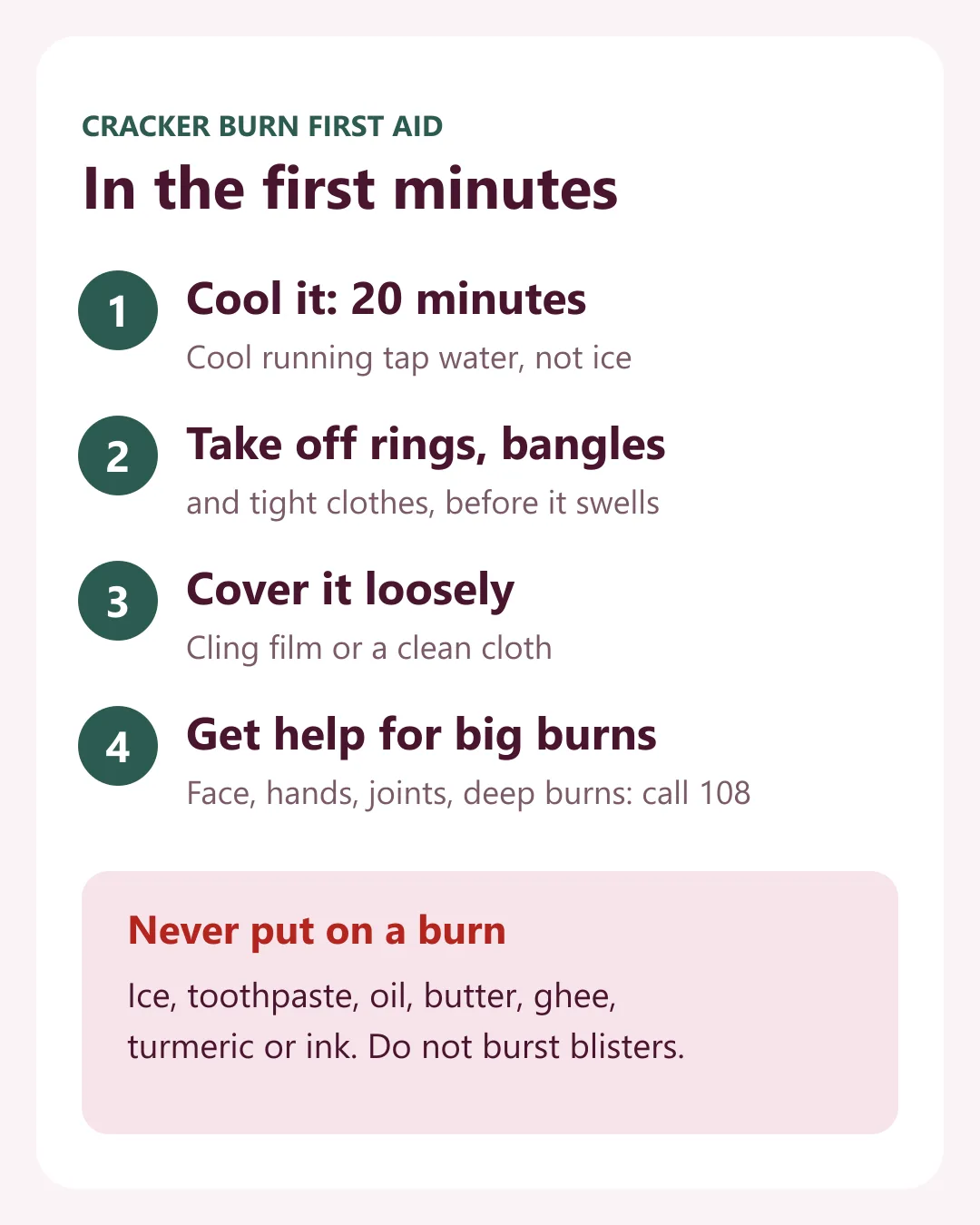
- Move away and stop the burning. If clothes catch fire: stop, drop to the ground and roll. Smother flames with a thick blanket or a bucket of water.
- Cool the burn with cool running tap water for 20 minutes. Start as soon as you can. Cooling still helps for up to three hours after the burn. Use ordinary tap water, not ice or ice water.
- Remove rings, bangles, watches and tight clothing near the burn before it swells. If cloth is stuck to the skin, leave it and cool over it.
- Cover the burn loosely with cling film (laid on, not wrapped tightly) or a clean, non-fluffy cloth. A clean plastic bag works for a hand.
- Keep the person warm, especially a child. Cool the burn, not the whole body.
- For pain, a usual dose of paracetamol can be given.
What not to put on a burn
Toothpaste, ice, oil, butter, ghee, turmeric, ink, coffee powder and home pastes all trap heat, irritate the wound and raise the risk of infection. They also hide the burn, so the doctor cannot judge how deep it is. Do not burst blisters, and do not peel off loose skin.
Which burns need a hospital
Go to the nearest hospital emergency department, or call 108, if:
- the burn is larger than the palm of the injured person's hand
- it is on the face, eyes, ears, neck, hands, feet, genitals or over a joint
- it goes all the way around a finger, arm or leg
- the skin looks white, grey, brown, charred or leathery, or the burn does not hurt much (a sign of a deep burn)
- a cracker burst in the hand, or there is a cut, swelling or numbness in the fingers
- the person breathed in smoke, has a hoarse voice or difficulty breathing
- the injured person is a young child, an older adult, pregnant, or has diabetes
- there is an injury to the eye
Eye injuries: do not rub the eye. If dust or powder went in, rinse gently with clean water. If something is stuck in the eye or the eye is cut, do not press on it or try to remove anything. Cover it lightly and go to an eye hospital straight away.
How deep is the burn?
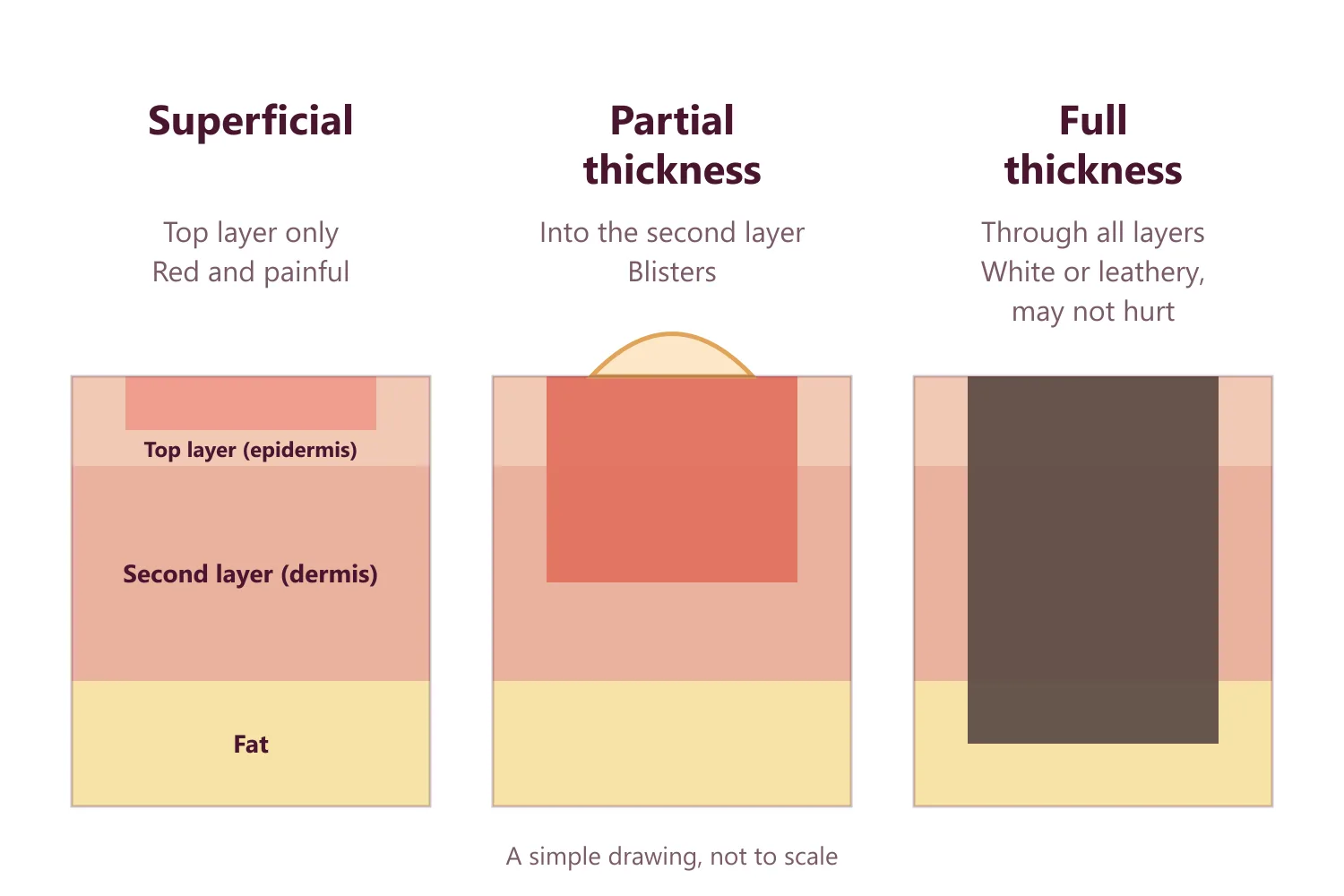
- Superficial burns affect only the top layer of skin. The skin is red and painful, with no blisters, and usually heals within a week.
- Partial-thickness burns reach into the second layer and form blisters. Shallow ones heal in about two to three weeks with good dressings. Deeper ones heal slowly and are more likely to scar.
- Full-thickness burns destroy all the layers of skin. The skin can look white, brown or leathery, and may feel numb. These do not heal well on their own and usually need surgery.
A burn can also look mild on the first day and turn out deeper over the next two or three days. That is why a burn should be checked again if it is not clearly healing.
Why a plastic surgeon should see deeper burns
A burn is not only a wound to be closed. Skin that heals slowly or tightly can pull on fingers, elbows, the neck or the eyelids, and limit movement for years. Plastic surgeons are trained to treat burns with healing, movement and appearance in mind from the first visit.
- Judging the depth. Deciding early which areas will heal on their own and which will not saves weeks of dressings on a burn that was never going to heal.
- The right dressings. Clean, moist dressings that are changed at the right time protect the wound, ease pain and lower the risk of infection.
- Skin grafts when needed. For deep burns, removing the burnt skin and covering the area with a thin layer of the person's own healthy skin helps it heal faster, with less infection and less tight scarring.
- Protecting hands, face and joints. Splints, positioning and early exercises keep fingers, elbows and the neck from stiffening while the burn heals.
- Care for the scar. Pressure garments, silicone gel or sheets, massage, moisturiser and sun protection help a scar settle. A burn scar keeps changing for many months, often a year or more.
- Later reconstruction, if needed. If a scar becomes tight (a contracture), surgery to release it, with skin grafts or flaps, can bring back movement. Laser treatment can soften and flatten some scars.
Children need special care: their skin is thin, burns can be deeper than they look, and a scar may tighten as they grow, so follow-up continues for longer.
See a doctor if
- a burn has not healed within two weeks
- a burn shows signs of infection: more pain, redness spreading around it, pus, a bad smell or fever
- a healed burn scar becomes raised, red and itchy
- the skin over a joint, finger or the neck feels tight or stops you moving fully
Safer celebrations
- Buy crackers from licensed shops and read the instructions on the box.
- Light crackers at arm's length with a long incense stick, never with a matchstick held close.
- Never hold a lit cracker in the hand, and never bend over one.
- If a cracker does not go off, do not go back to it or relight it. Wait, then pour water over it.
- Wear cotton clothes. Synthetic cloth melts and sticks to the skin. Keep dupattas and loose saree ends tucked away.
- Keep a bucket of water and a bucket of sand nearby.
- Children should always be watched by an adult, even with sparklers. Sparkler wires stay hot for a long time: put used ones in a bucket of water.
- Burst crackers in an open space, away from vehicles, dry leaves and anything that can catch fire.
At Ayathi, Dr. Swathi treats burns once emergency care is done, burns that are slow to heal, and burn scars and contractures. Read more about burns, electric injuries and contractures.
This article is general information, not medical advice. Read the medical disclaimer.